
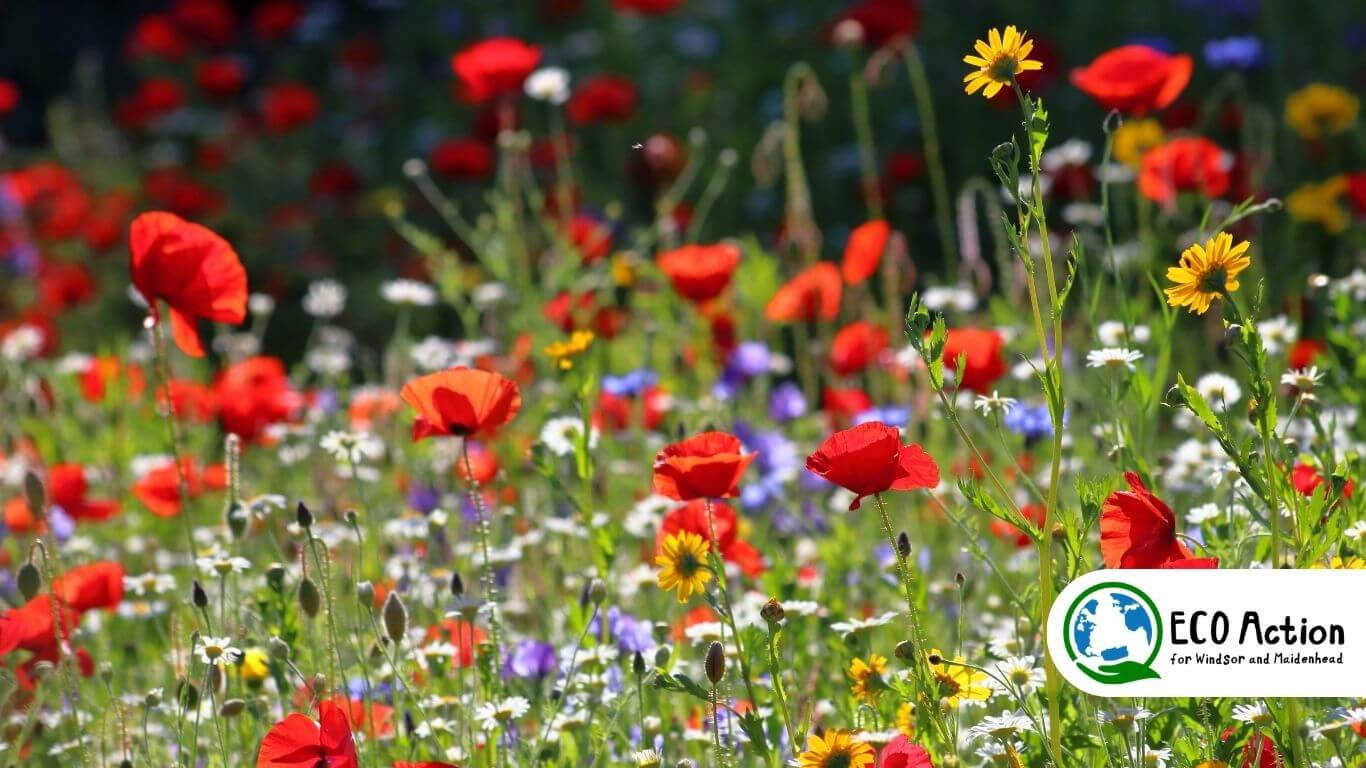
Why plant wildflowers?
Pollinators like bees and butterflies are struggling because we’ve paved over the plants they depend on. A small wildflower patch gives them somewhere to feed and shelter, and the best part is it takes almost no effort to set up.
Why not garden flowers?
Britain’s wildflowers and its pollinators have evolved together over thousands of years, so they’re perfectly matched in ways garden flowers aren’t. Many plants we buy have been so heavily bred for looks that bees can’t access the nectar or pollen inside. Wildflowers haven’t been tampered with. Everything is exactly where a pollinator expects it to be. And with the UK having lost 97% of its wildflower meadows since the 1930s, that food source has nearly vanished. Even a small patch makes a real difference.

At garden centres supermarkets or online, look for a mix labelled “native” or “pollinator friendly” A basic packet costs as little as £2.

Anywhere sunny works, a flowerbed, a forgotten corner, a pot on a balcony. Size doesn’t matter.

Wildflowers love poor soil, so skip the compost. Just clear any grass or weeds and rough up the surface with a rake.

Sprinkle them thinly across the surface and press them in gently with your foot. No need to dig them in

Keep the soil moist for the first few weeks, then step back and let then let nature do its thing!
And that’s really all there is to it!
Five simple steps, one small patch of ground, and a whole lot of good for the wildlife on your doorstep. Wildflowers don’t need much from us, just a little space and a chance to grow. And in return? Colour, life, and a garden buzzing with bees and butterflies all summer long.
